Driveways & Aprons
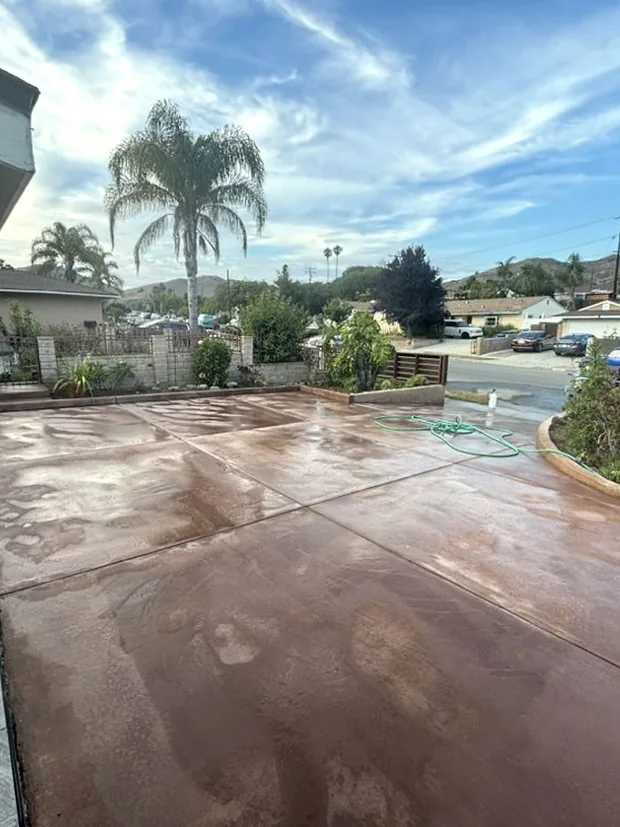
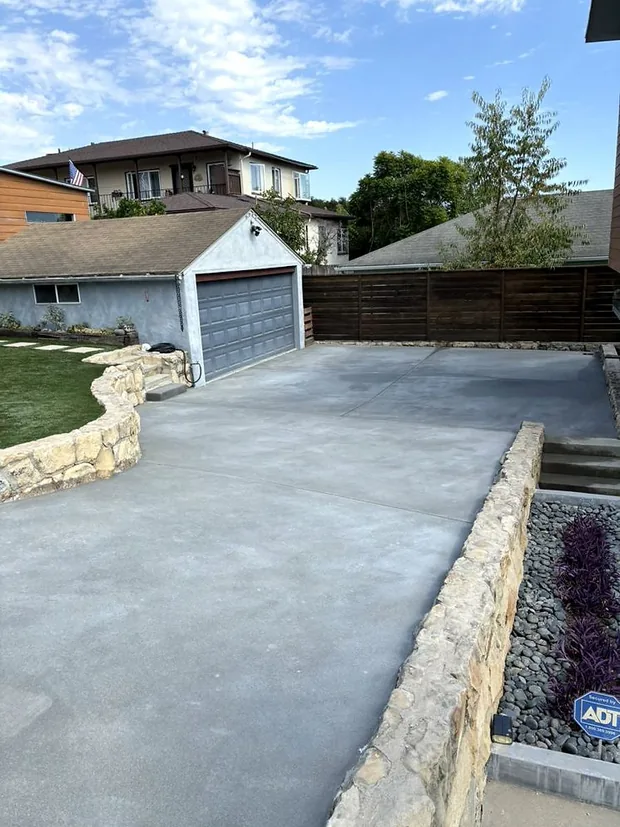
Broken out, regraded, formed and poured on a compacted base, then jointed so it cracks on our line and not its own.
What we pour
Front paths, garden walks and public sidewalk, formed in place to the line of the bed and finished to match what is already on the street.
How we do it
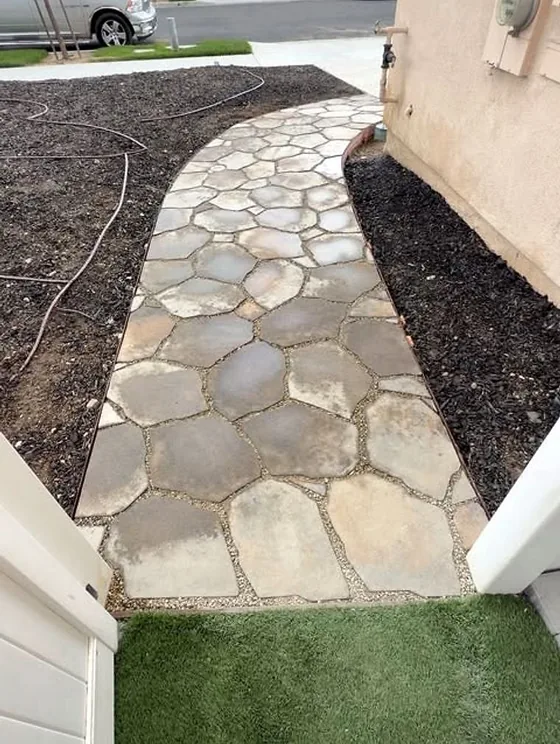
A walkway is a small pour with no room to hide anything: every edge is at eye level and both sides are on show. Curves are formed in place with flexible forms that follow the bed, widths are held constant around the bend, and the surface is finished to match its neighbours: broom to match the city sidewalk, or stamped flagstone where the path is the feature.
Public sidewalk repair is its own discipline: matching the existing grade and joint spacing, forming to the kerb, and keeping the panel square so the new work reads as part of the street rather than a patch. Tree-root heaves get the root barrier conversation before the pour, not after.
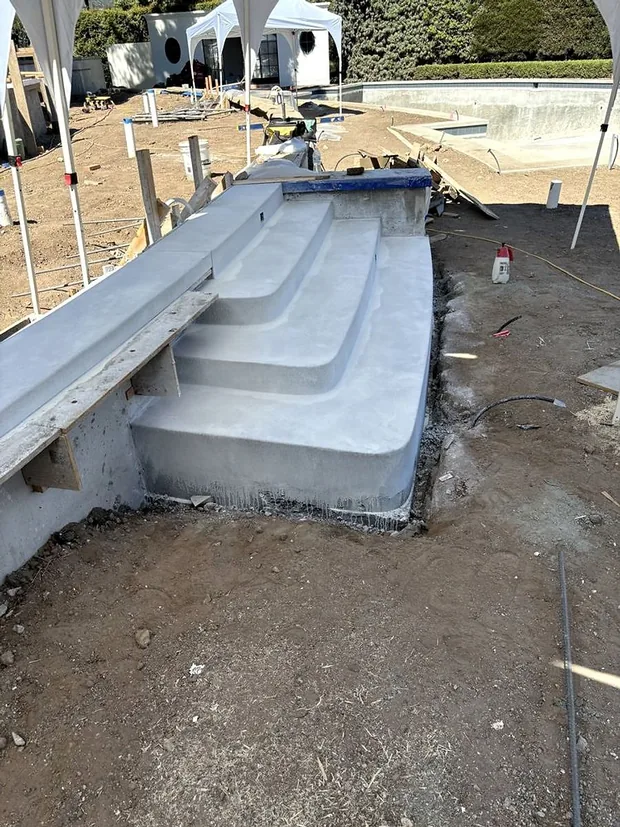
Steps in a walkway are cast with the run, risers even to the fraction, because an uneven step is the one everyone trips on. Where a path meets the driveway or the porch, the joint is tooled, not left to chance.
Formed
In place, to the curve
Flexible forms follow the bed line; widths hold constant through the bend.
Matching
Grade and finish
New panels read as part of the street, not a patch on it.
Steps
Cast with the run
Even risers, tooled nosings, no surprises underfoot.
Quoted
On site, free
Measure nothing; Anthony brings the tape.
Free estimate
A rough size and what is there now is enough to start. Anthony reads it, calls you back and walks the job with you: free, on site, quoted on the spot.